How to set up your team for success as an AI-first founder

Posted by
Latest Posts
Most founders I talk to have the same plan for AI: tell the team to use it… more. Go get ChatGPT, go try Claude.
It's a good start. The team moves a little faster, tasks get easier. But that's the tip of the iceberg.
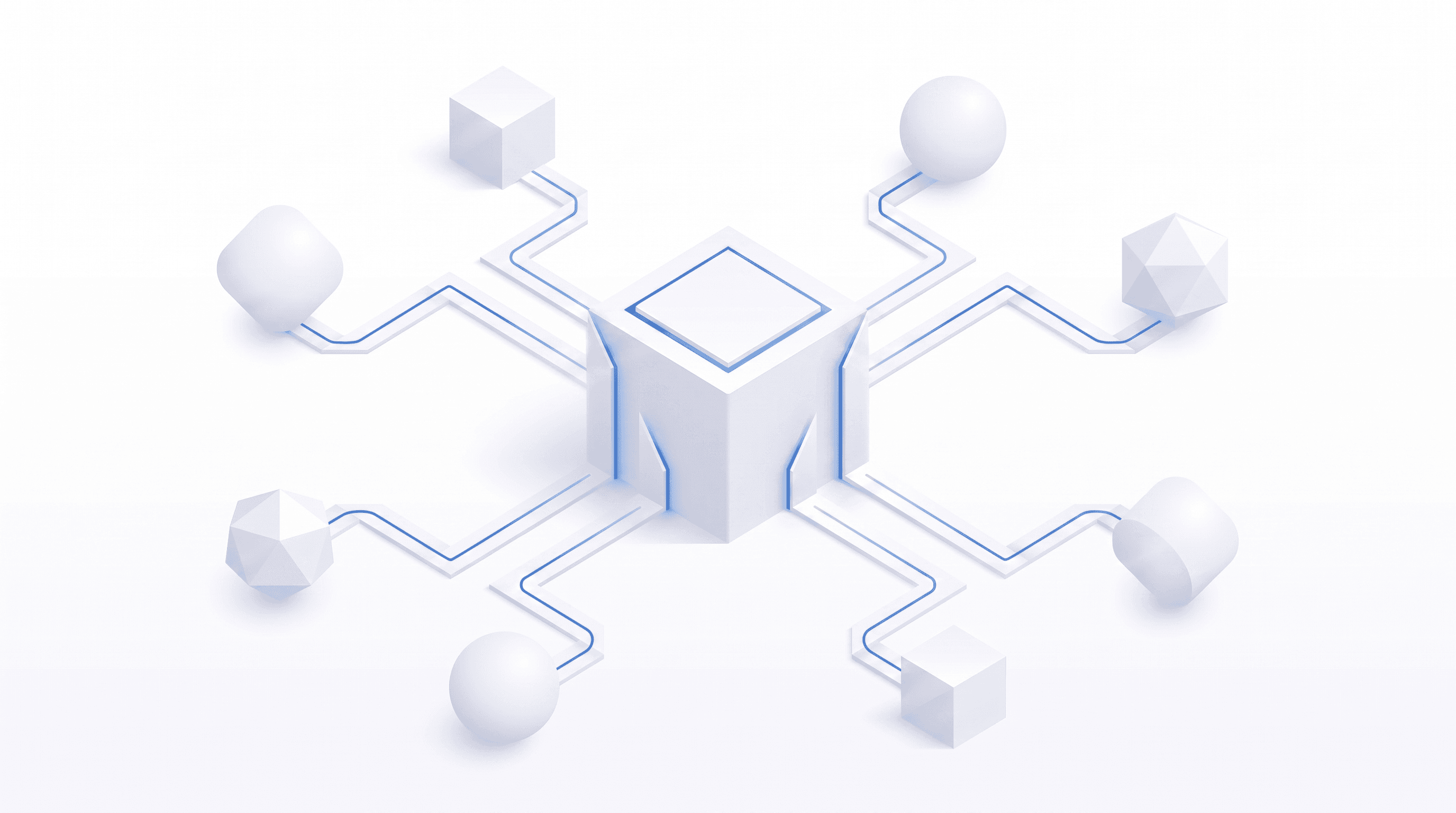
A new, shiny tool isn't a system. The real win is a single hub: one place that holds your whole business, transcripts, projects, clients, how you work, open to your team and the AI they use. That's the part most never build.
Without it, everything lives in one founder's head, or scattered across ten tools nobody else can search. Move fast like that and the team falls behind. Not because they're slow, but because the knowledge never reached them.
I was talking this through with my friend and client Joshua at a Mastermind last week. We kept landing on the same thing. The job isn't handing everyone a chatbot. It's building one hub that the whole team can plug into.
Here's how we do it at Inovo. Three parts.
1. Put everything in one hub
Start with one place for everything. We put it all in Supabase: transcripts, tasks, projects, clients, and the way we like to do things.
Supabase can also work as a vector database in the future. This means it's easy for AI to search across all of it. Ask "what did the client say about X project?" and it finds the moment in the transcript.
It can store more than data. We store skills and SOP in Supabase. For example, the way we frame and shape a project. So when anyone in the company requests data back it’s also passing it through how we process data at our company.
2. Let everyone bring their own AI
A hub works best if everyone can use it. Your human team AND your AI team.
We do this with something called an MCP. A MCP is simply way for any AI tool to connect to your new hub. Works with Claude, ChatGPT, Manus, or whatever your team uses. Team members can use their favorite platform, connect to the company hub, then access data.
Most AI tools now let you add a custom MCP, and once it's connected, the agent can reach your hub directly with no copying and -pasting required.
Now, this does NOT mean everyone can see everything. Each person and their agents can only see what their role allows. Your designer can't pull billing info. Your bookkeeper doesn't need to view and edit project statuses.
It also runs both ways. They can log a task or update client info. The hub gets smarter and smarter the more your team uses it.
Here’s how I use it
I kickoff a session in Devin (my preferred coding tool), mention a project, and the agent pulls the requirements and tasks from our Inovo hub. After a client call, it can pull the transcript and works the new context from call into our work session.
It even keeps me honest: if I try to move a project to in progress without a framing doc and it interrupts, because our hub knows that's a step we shouldn’t skip. Then it works through tasks, leaves comments, and pushes updates while I guide it.
The agent and I are working together interacting with the company in real time.
3. Invest in your humans, not just agents
This is an easy trap in this new world. As an AI first founder, you can get distracted and sucked into all the ways to improve our system, But forget to bring your human team along.
Henry Cloud shared a story that stuck with me. A CEO once asked, "What if we invest in our people and they leave?"
The response was simple: "What if you don't invest in them and they stay?"
I found a weekly team meeting works best for my workflow. I don’t prepare for these meetings, I simply show up and share what I’m learning this week and how it affects our business. Our team is mostly developers, so I also end up learning a lot from the team.
That's our current system
One hub for everything you know. Open access so anyone can bring their own AI. And as much investment in your people as in your agents.
We've put a lot of what we've learned into a free course on building with AI. Check it out here: AI Builders Course.
As always, if you have questions, send me a reply!